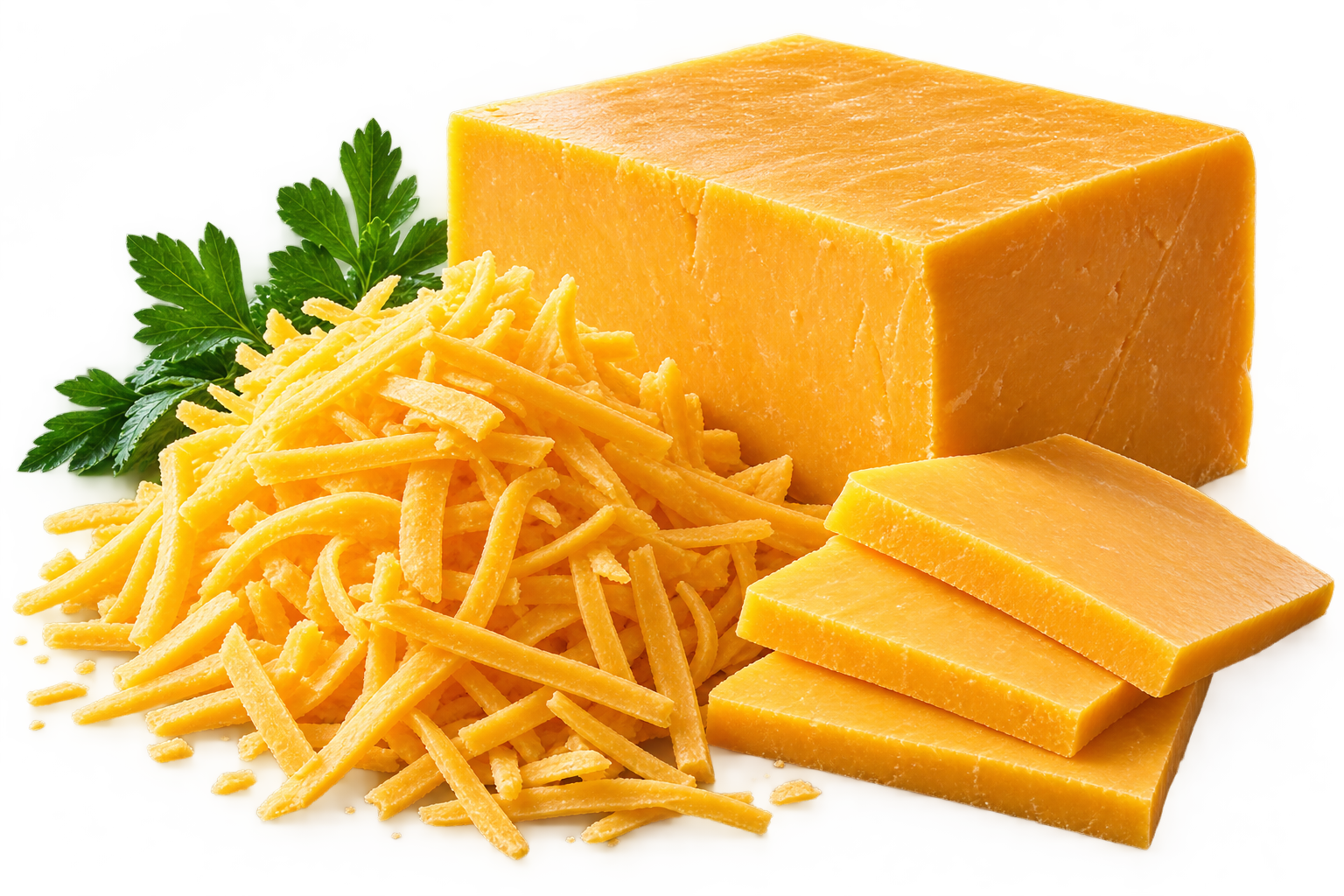
🦴Highest calcium — 721mg — 72% DV per 100g
💊Vitamin K2 — directs calcium to bones
💪24.9g protein per 100g
😌Near zero lactose — tolerated by most
🐑CLA — Antioxidant support and body composition
⚠️High calorie — 113 kcal per slice
Macronutrient Breakdown — per 100g
Protein24.9g · 25% of calories
Fat33.1g · 74% of calories
Carbohydrates1.28g · 1% of calories
High in calories due to concentrated fat (33.1g/100g). Very low carbs (1.28g/100g) — no lactose (removed during cheese-making). Rich in vitamin K2 (menaquinone). Aged cheeses have more flavour and less moisture — similar nutrition to fresh cheddar.
Cheddar Cheese Benefits
Highest Calcium of Any Common Food
Cheddar provides 721mg of calcium per 100g — 72% of the daily value — more than any other commonly consumed food. Two slices (56g) provide 403mg of calcium — comparable to 3.5 cups of milk in absolute calcium, with near-zero lactose. The calcium in cheese is exceptionally bioavailable, accompanied by phosphorus and casein phosphopeptides that enhance calcium absorption and retention in bone.
Vitamin K2 — The Missing Link in Bone Health
Cheddar and other aged cheeses are good sources of vitamin K2 (menaquinone, primarily MK-4 and MK-7). Vitamin K2 activates osteocalcin — a protein that binds calcium into bone — and also activates matrix Gla-protein (MGP), which may help reduce risk of calcium from depositing in arterial walls. Low vitamin K2 intake is independently associated with osteoporosis and arterial calcification, even at adequate calcium intake. Vitamin K2 is found almost exclusively in animal foods and fermented foods.
CLA and Metabolic Benefits
Dairy fat from grass-fed cows contains conjugated linoleic acid (CLA) — a naturally occurring fatty acid associated with Antioxidant support properties, reduced body fat, and improved insulin sensitivity. Cheese from grass-fed animals has 2-3× more CLA than grain-fed. Research on CLA shows it associated with antioxidant activity cell growth, particularly in breast and colorectal cancer cell lines. The amounts in dietary cheese, while not pharmacological, contribute meaningfully to CLA intake with regular consumption.
Protein and Satiety
At 24.9g of protein per 100g, cheese is an excellent protein source — comparable to lean meat. The protein in cheddar is casein — slow-digesting and highly satiating. The fat-protein combination in cheese creates a very strong satiety response per calorie. Research suggests cheese-containing meals reduce subsequent calorie intake and improve diet adherence.
Frequently Asked Questions
How many calories in cheddar cheese?
Cheddar cheese has 403 calories per 100g. One slice (28g/1oz): 113 kcal. Two slices: 226 kcal.
Is cheddar cheese high in calcium?
Yes — cheddar provides 721mg of calcium per 100g (72% DV) — the highest of any common food. Two slices provide more calcium than a cup of milk.
Is cheese good for weight loss?
In moderate portions, cheese can fit into weight loss diets — high protein and fat create strong satiety. The issue is calorie density (403 kcal/100g). A 28g slice adds 113 kcal and 7g protein as a flavourful, satisfying addition to meals.
Does cheese have lactose?
Very little — most lactose is removed in the cheese-making process when whey is drained. Aged cheddar has <0.1g of lactose per serving. Most lactose-intolerant people can eat cheddar without symptoms.
Is cheddar cheese keto?
Yes — only 1.28g carbs per 100g. Cheese is one of the most popular keto foods due to high fat, good protein, and near-zero carbs.
Is cheese bad for your heart?
Evidence is more nuanced than previously thought. Multiple large Evidence suggests no association between cheese consumption and cardiovascular disease — and some show protective effects. The calcium, vitamin K2, and specific fatty acids in cheese may offset concerns about saturated fat.
Nutrition values from USDA FoodData Central. Not medical advice.