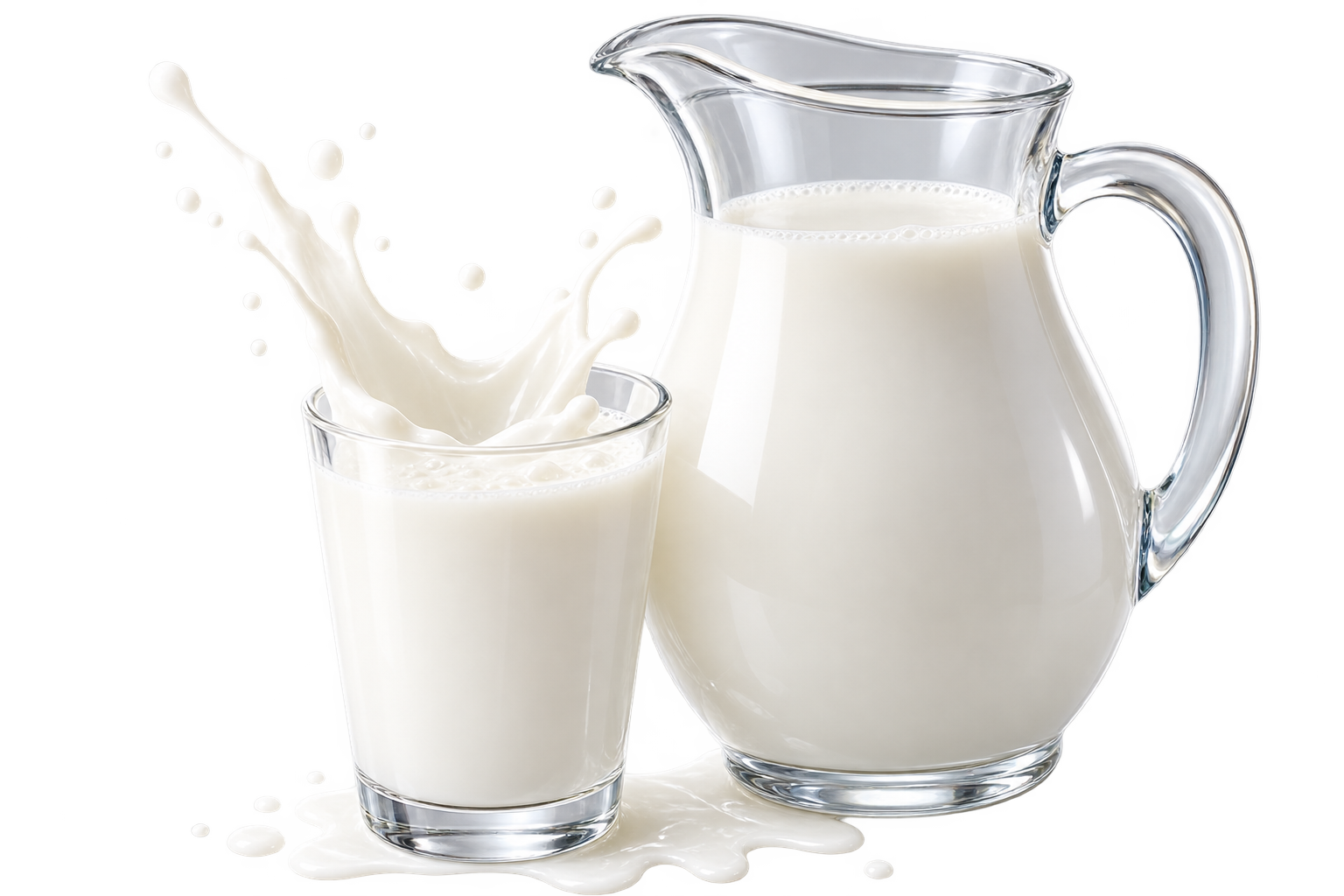
🦴Best calcium source — 113mg/100ml, 11% DV
💊Vitamin B12 — 18% Daily Value per cup
☀️Vitamin D — fortified — 15% DV per cup
💪Complete protein — all 9 essential AAs
🥛Casein protein — slow-digesting
⚡Potassium — 150mg per 100ml
Macronutrient Breakdown — per 100g
Protein3.4g · 32% of calories
Fat1.0g · 21% of calories
Carbohydrates5.0g · 47% of calories
Calories vary significantly by fat content: skimmed 42 kcal/100ml, semi-skimmed 46 kcal, whole 61 kcal. All types have similar protein (3.4g/100ml) and calcium (113mg/100ml). Lactose provides most of the carbohydrates.
Milk Health Benefits
Calcium Bioavailability — The Gold Standard
Milk is the most bioavailable dietary calcium source. Calcium from milk is absorbed at approximately 32% efficiency — significantly higher than most plant sources. Spinach calcium is only ~5% absorbable due to oxalates; almonds ~21%; kale ~49% but much lower absolute amount. A cup of milk provides 30% of the daily calcium requirement in a highly absorbable form. The phosphorus-to-calcium ratio in milk also enhances calcium absorption and retention in bone.
Casein and Whey — Unique Protein Blend
Milk protein is 80% casein and 20% whey. This combination provides a 'dual-release' protein effect: whey is rapidly absorbed (30-60 minutes), providing a quick amino acid spike for muscle protein synthesis; casein forms a gel in the stomach, releasing amino acids slowly over 5-7 hours. This sustained release may help reduce risk of muscle protein breakdown between meals, making milk uniquely effective for overnight muscle recovery when consumed before sleep.
Cardiovascular Evidence — Fat Paradox
Despite dairy fat being largely saturated, meta-analyses consistently show no increased cardiovascular risk from dairy consumption and even suggest potential benefits. A 2018 Lancet study of 136,000 people across 21 countries found higher dairy intake was associated with lower cardiovascular disease risk and lower mortality — a counterintuitive finding. The calcium, potassium, and specific fatty acids (rumenic acid) in dairy may offset any saturated fat concerns.
Iodine — Often Overlooked
Milk is one of the most reliable dietary sources of iodine in non-coastal regions, providing ~45µg per 100ml (30% DV) primarily from iodine-fortified cattle feed. Iodine is essential for thyroid hormone synthesis. In countries without universal salt iodisation, dairy is a critical iodine source. Milk's iodine contribution is particularly important for pregnant women, whose requirements increase 50%.
Frequently Asked Questions
How many calories in milk?
Skimmed milk: 42 calories per 100ml. Whole milk: 61 kcal/100ml. A cup (240ml) of skimmed milk: 100 kcal. A cup of whole milk: 146 kcal.
Is milk good for bone health?
Yes — milk provides 113mg of highly bioavailable calcium per 100ml. The calcium in milk is absorbed at ~32% efficiency (vs ~5% for plant calcium bound to oxalates). Regular dairy consumption is associated with higher bone density and reduced fracture risk.
Is milk healthy?
Yes for most people. Milk provides calcium, B12, vitamin D, and complete protein. The association with disease risk varies by individual — some evidence links full-fat dairy to neutral or beneficial effects on cardiovascular risk.
Is milk good for weight loss?
Moderate amounts fit well — 100 kcal per cup of skimmed milk with 8g protein. Research suggests dairy consumption is not associated with weight gain and may improve body composition.
What is lactose intolerance?
~65% of adults have reduced lactase enzyme production after childhood. Symptoms include bloating, gas, and diarrhoea from lactose. Many lactose-intolerant people tolerate small amounts (1 cup/day). Lactase supplements, hard cheeses, and yogurt are alternatives.
Whole milk vs skimmed milk?
Whole milk: 61 kcal/100ml, 3.3g fat. Skimmed: 42 kcal, 0.1g fat. Both have identical calcium and similar protein. Recent research suggests full-fat dairy is not harmful and may be beneficial for satiety and cardiovascular health.
Nutrition values from USDA FoodData Central. Not medical advice.