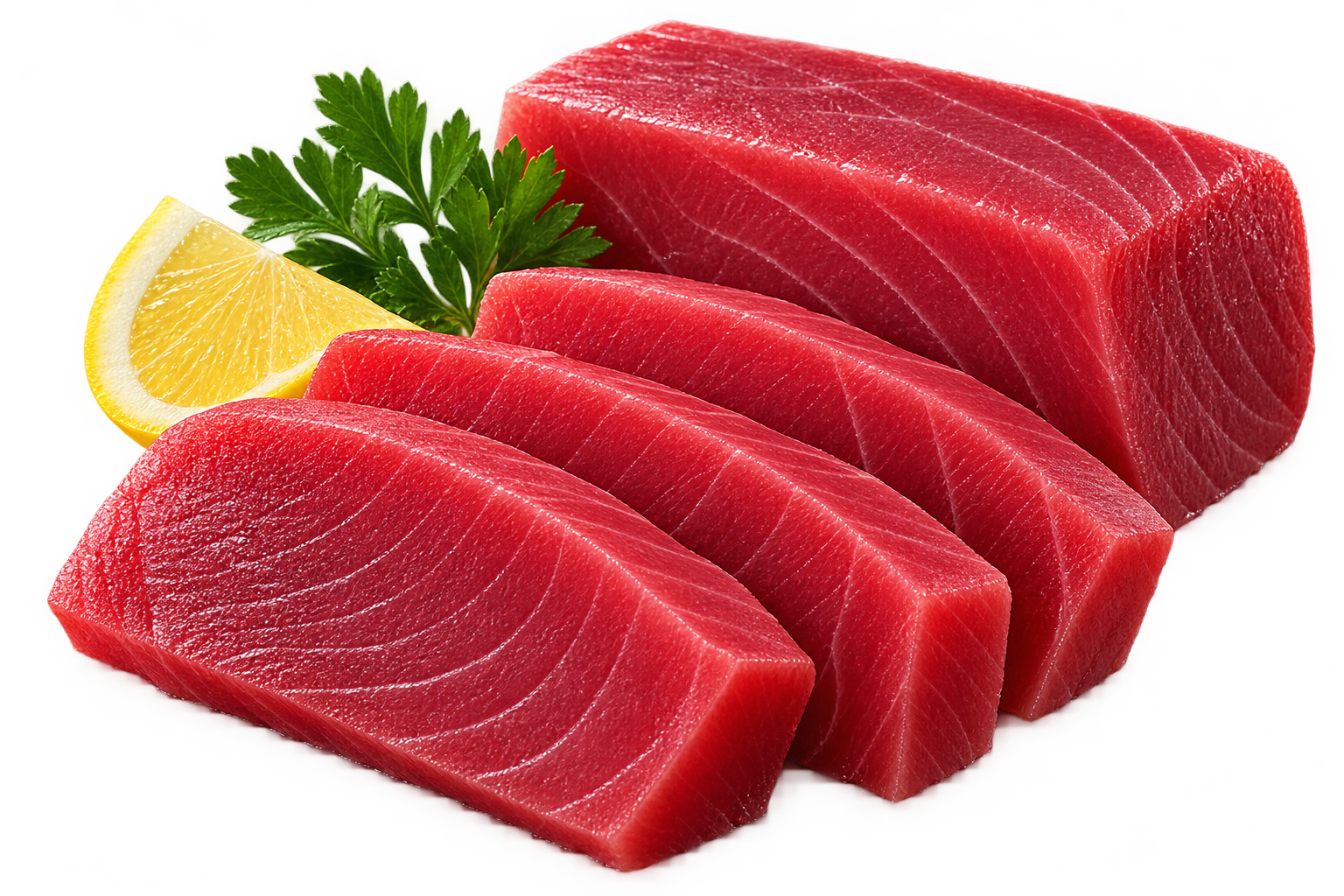
💪29.9g protein per 100g — highest protein fish
🔬Selenium — 102% Daily Value
🧠Vitamin B6 — 61% Daily Value
⚡Potassium — 441mg per 100g
❤️Omega-3 EPA+DHA — 0.27g/100g
⚠️Mercury — limit to 2-3 servings/week
Macronutrient Breakdown — per 100g
Protein29.9g · 83% of calories
Fat3.2g · 20% of calories
Carbohydrates0.0g · 0% of calories
Canned tuna in water: ~109 kcal/100g. Canned in oil: ~200 kcal/100g. Fresh/cooked yellowfin: ~144 kcal/100g. Albacore (white tuna) has more omega-3 but also more mercury than skipjack (light tuna).
Tuna Health Benefits
Highest Protein Density of Any Common Fish
Fresh tuna provides 29.9g of protein per 100g at only 144 kcal — a protein-to-calorie ratio of 0.83, rivalling turkey breast (0.89). A can of tuna in water delivers 42g of complete protein at under 200 calories. Tuna protein has a PDCAAS of 1.0 — the maximum score, indicating perfect amino acid balance relative to human requirements.
Selenium — Full Daily Value in One Serving
Tuna provides 56.3µg of selenium per 100g — 102% of the daily value. A single 100g serving completely covers the daily selenium requirement. Selenium is essential for the antioxidant enzyme glutathione peroxidase, thyroid hormone metabolism, and DNA synthesis. Selenium in fish (selenoneine — a unique selenium compound found only in marine animals) has higher bioavailability than selenium in plant foods or supplements.
Vitamin B6 and Brain Health
Tuna provides 1.04mg of vitamin B6 per 100g — 61% of the daily value. B6 is essential for over 100 enzyme reactions, including serotonin, dopamine, and GABA synthesis. High B6 intake is associated with reduced risk of depression, improved cognitive function, and lower homocysteine levels (a cardiovascular risk factor). Tuna is one of the richest dietary sources of B6.
Niacin — 117% Daily Value
Tuna is one of the most concentrated food sources of niacin (B3), providing 18.8mg per 100g — 117% of the daily value. Niacin is essential for over 400 NAD-dependent reactions, including energy production, DNA repair, and cell signalling. Pharmacological doses of niacin are used clinically to raise HDL cholesterol — tuna's niacin content, while not pharmacological, contributes meaningfully to daily intake.
Frequently Asked Questions
How many calories in tuna?
Fresh cooked tuna: 144 calories per 100g. Canned in water (165g): 191 kcal, 42g protein. Canned in oil (165g): ~330 kcal.
Is canned tuna healthy?
Yes — excellent source of protein, selenium, and B12. Mercury is the main concern. Light tuna (skipjack) has significantly less mercury than albacore (white tuna). 2-3 servings/week of light tuna is safe for most adults.
How much protein in a can of tuna?
A standard can (165g, drained) provides approximately 42g of protein at 191 calories — making it one of the best protein-to-calorie foods available.
Is tuna keto?
Yes — zero carbs. Canned tuna in water is one of the most economical keto protein sources.
Mercury in tuna — how much is safe?
Light tuna (skipjack): up to 3-4 servings/week for adults. Albacore (white tuna): 1 serving/week for adults, avoid for pregnant women and children. The EPA/FDA advises pregnant women to eat 2-3 servings/week of lower-mercury seafood.
Tuna in water vs tuna in oil?
In water: ~109 kcal/100g, ~25g protein. In oil (drained): ~200 kcal/100g. In water is preferable for calorie control. In oil provides additional fat-soluble vitamin absorption.
Nutrition values from USDA FoodData Central. Not medical advice.