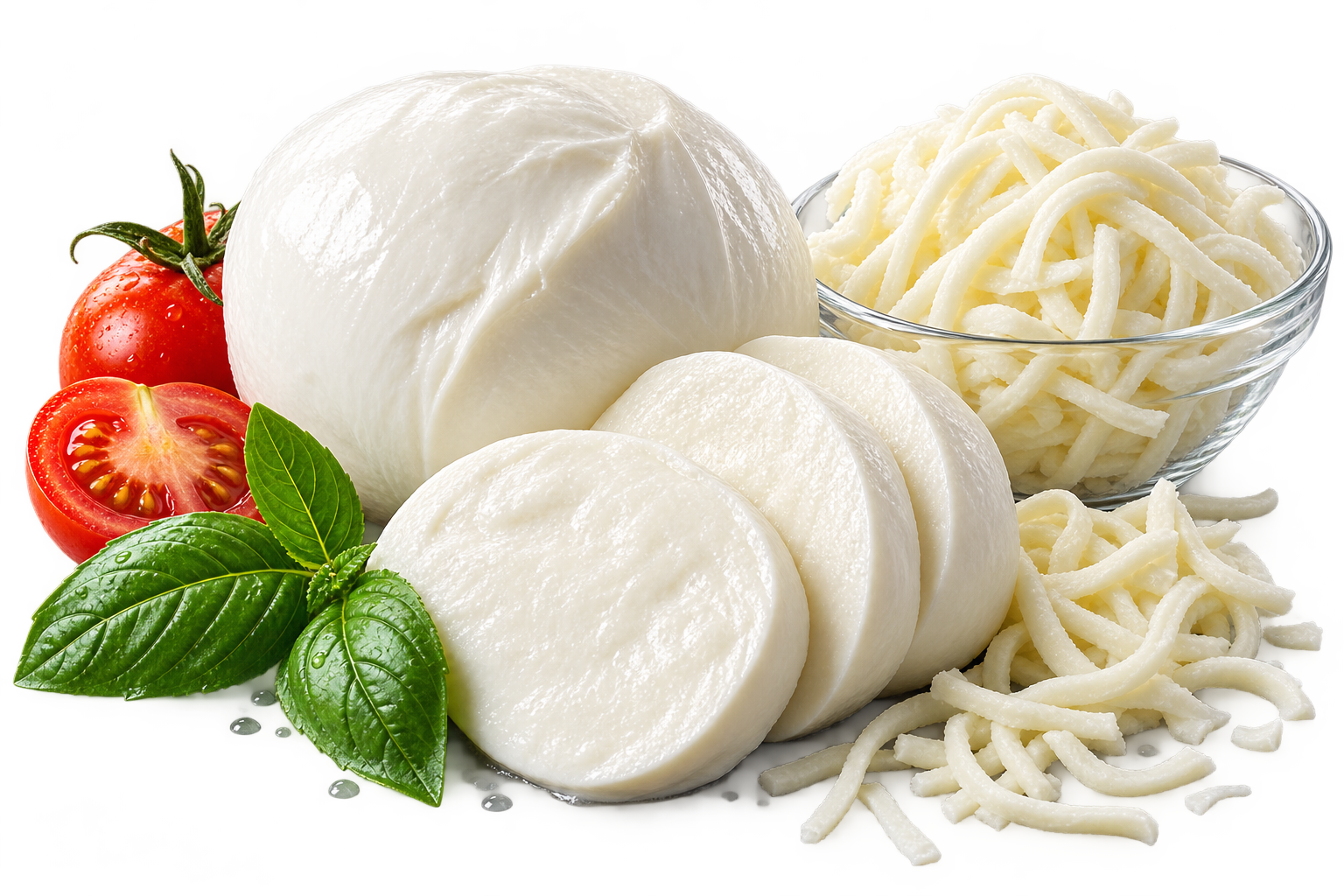
🦴Calcium — 505mg — 51% DV per 100g
💊Vitamin B12 — 29% Daily Value
💪21.6g protein per 100g
😌Near zero lactose
🍕Best melting cheese for cooking
🔬Phosphorus — 35% Daily Value
Macronutrient Breakdown — per 100g
Protein21.6g · 31% of calories
Fat17.1g · 55% of calories
Carbohydrates3.1g · 4% of calories
Part-skim mozzarella: 254 kcal/100g. Whole milk mozzarella: 300 kcal. Fresh buffalo mozzarella: ~240 kcal. Low moisture mozzarella (for pizza): 280 kcal. Very low lactose — suitable for lactose-intolerant people.
Mozzarella Benefits
Calcium — 51% Daily Value per 100g
Mozzarella provides 505mg of calcium per 100g — 51% of the daily value. This makes mozzarella an excellent calcium source, though less dense than cheddar (721mg/100g). The calcium in mozzarella is packaged with phosphorus and casein phosphopeptides that enhance absorption and retention. Two slices of mozzarella provide 283mg of calcium — nearly 30% of the daily requirement.
Lower Calorie Cheese Alternative
At 280 kcal per 100g, mozzarella provides 30% fewer calories than cheddar (403 kcal) while maintaining similar protein (21.6g vs 24.9g). For people who want to reduce calorie intake without eliminating cheese, switching from cheddar to mozzarella saves approximately 35 calories per slice while maintaining a similar protein contribution. Part-skim mozzarella saves an additional 26 calories per 100g.
Vitamin K2 and Cardiovascular Health
Like other cheese, mozzarella contains vitamin K2 — particularly the MK-4 form. K2 activates matrix Gla-protein (MGP) which may help reduce risk of calcium from depositing in arterial walls (arterial calcification). A 2004 Rotterdam study of 4,800 people found that the highest tertile of K2 intake had 57% lower risk of aortic calcification and 52% lower risk of cardiovascular mortality. The K2 in mozzarella, while moderate, contributes to this protective effect.
Satiety and Appetite Control
Mozzarella's protein-fat combination creates a strong satiety response. The casein protein is slow-digesting, maintaining satiety between meals. The fat content (17.1g/100g) slows gastric emptying, prolonging satiety further. Research on dairy products consistently shows they reduce calorie intake at subsequent meals despite their caloric density.
Frequently Asked Questions
How many calories in mozzarella?
Mozzarella has 280 calories per 100g. One slice (28g): 78 kcal and 6g protein. Part-skim: 254 kcal/100g.
Is mozzarella healthier than cheddar?
Mozzarella has fewer calories (280 vs 403 kcal/100g) and less fat (17g vs 33g). Cheddar has more calcium (721mg vs 505mg) and protein (24.9g vs 21.6g). Mozzarella is better for calorie control; cheddar is better for absolute calcium and protein.
Is mozzarella good for weight loss?
Better than cheddar in moderate portions. One slice (78 kcal, 6g protein) is a reasonable addition to meals. The high protein and fat create satiety.
Is mozzarella keto?
Yes — 3.1g carbs per 100g (near zero lactose). Excellent keto cheese with good protein and fat.
Is mozzarella a good calcium source?
Yes — 505mg calcium per 100g (51% DV). Two slices provide 283mg calcium — 28% of the daily requirement. Very bioavailable due to low oxalate content.
Fresh vs low-moisture mozzarella?
Fresh: ~240 kcal/100g, softer, more moisture. Low-moisture (for pizza): ~280 kcal/100g, drier, better for melting. Nutritionally similar — fresh has slightly less sodium and more water.
Nutrition values from USDA FoodData Central. Not medical advice.