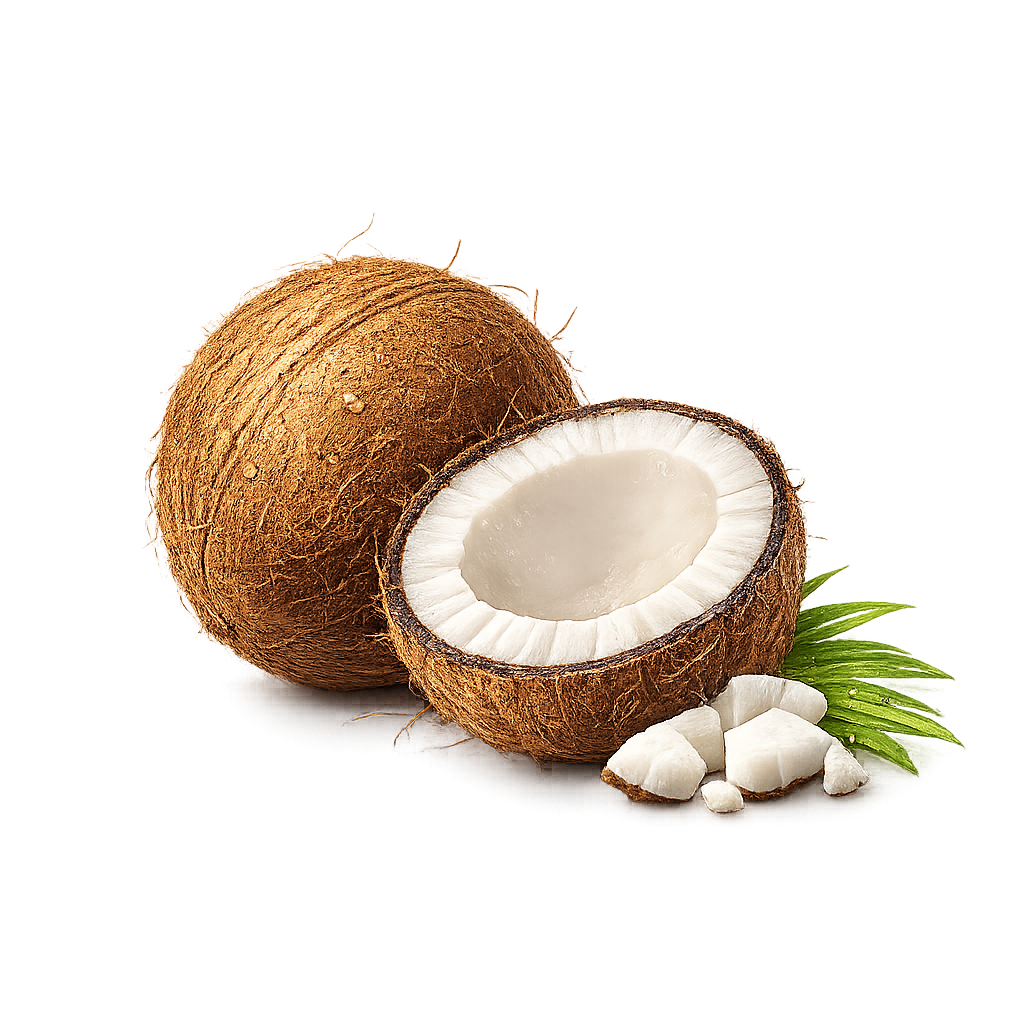
Source: USDA FoodData Central · Raw Meat · Data verified by CaloriesCalc
354
kcal
per 100g, raw meat
15.23
g
Carbs
3.33
g
Protein
33.49
g
Fat
9.0
g
Fiber
283
kcal per cup shredded (80g)
159
kcal per piece 2"×2" (45g)
99
kcal per oz (28g)
✔ Rich in MCT fats✔ High in fiber✔ Good source of manganese✔ Keto-friendly✔ Gluten free✔ Vegan
🥥
🥥Rich in medium-chain triglycerides (MCTs)
⚡MCTs converted directly to energy
🌿Very high fiber — 9g per 100g
✅Keto-friendly — 6.2g net carbs
🔬Excellent manganese source — 113% DV
💪Lauric acid supports immune function
🥥 Calculate Calories for Any Coconut Weight
Weight100g
Nutrition Facts
Per 100g (raw coconut)
* % Daily Value based on a 2,000 kcal diet.
Quick summary: Coconut meat contains 354 calories per 100g — the highest of any common fruit. However, 80% of those calories come from MCTs (medium-chain triglycerides) that are metabolised differently from other fats, preferentially burned for energy or converted to ketones. With 9g of fiber and only 6.2g of net carbs per 100g, coconut is keto-friendly and provides 65% of daily manganese plus significant potassium and magnesium.
Vitamins & Minerals — per 100g
Nutrient
Amount
% Daily Value
Bar
Manganese
1.50 mg
65%
Selenium
10.1 µg
18%
Copper
0.43 mg
48%
Potassium
356 mg
8%
Magnesium
32 mg
8%
Phosphorus
113 mg
9%
Iron
2.43 mg
14%
Zinc
1.10 mg
10%
Vitamin C
3.3 mg
4%
Folate (B9)
26 µg
7%
Calories in Coconut by Weight
Weight
Calories
Carbs
Protein
Fat
Calories in Different Coconut Servings
Serving
Weight
Calories
Carbs
Net Carbs
Fat
1 oz (28g)
28g
99 kcal
4.3g
1.7g
9.4g
1 piece 2"×2" (45g)
45g
159 kcal
6.9g
2.8g
15.1g
⭐ 1 cup shredded (80g)
80g
283 kcal
12.2g
4.9g
26.8g
1 tbsp shredded (5g)
5g
18 kcal
0.8g
0.3g
1.7g
100ml coconut water
100ml
19 kcal
3.7g
3.4g
0.2g
How does coconut fit your daily calorie goal?
Calculate your TDEE to see exactly how it fits your daily budget
Coconut is unique among fruits: 80% of its calories come from fat, primarily medium-chain triglycerides (MCTs) — lauric acid (47%), myristic acid, and caprylic acid. Unlike long-chain fats, MCTs are absorbed directly into the portal vein and converted to energy rapidly rather than stored as body fat.
Micronutrient Highlights
🔬
Manganese
1.50 mg
65%
Essential for antioxidant enzymes and bone formation
💪
Lauric Acid
~20g
MCT fat
Antimicrobial, may raise HDL cholesterol
⚡
Potassium
356 mg
8% Daily Value
Blood pressure and electrolyte balance
🌿
Fiber
9.0 g
32% Daily Value
Gut health — highest fiber density of any fruit
🏋
Magnesium
32 mg
8% Daily Value
Muscle function and energy production
🛡
Selenium
10.1 µg
18% Daily Value
Thyroid function and antioxidant defence
Coconut Health Benefits & Nutrition
Medium-Chain Triglycerides — the Unique Coconut Fat
Approximately 90% of coconut fat is saturated fat, but it is almost entirely medium-chain triglycerides (MCTs) rather than the long-chain saturated fats found in meat and dairy. MCTs, particularly lauric acid (C12), are absorbed differently: they bypass the lymphatic system and go directly to the liver, where they are preferentially oxidised for energy or converted to ketones. This means MCTs are much less likely to be stored as body fat compared to long-chain fats. MCT oil derived from coconut is used therapeutically for epilepsy, Alzheimer's disease, and athletic performance.
Highest Fiber Density of Any Common Fruit
Coconut meat contains 9g of fiber per 100g — more than any other commonly consumed fruit. This is primarily insoluble fiber that promotes bowel motility and feeds beneficial gut bacteria as it ferments in the colon. A piece of fresh coconut meat (45g) provides 4g of fiber — 14% of the daily value. This fiber content also explains coconut's low net carbs (6.2g/100g) despite containing 15g of total carbs.
Lauric Acid and Immune Function
Lauric acid (C12) makes up approximately 47% of coconut fat. In the body, lauric acid is converted to monolaurin — a monoglyceride that has demonstrated antimicrobial activity against bacteria, viruses, and fungi in laboratory studies. Breast milk is the only other significant dietary source of lauric acid, which may partly explain its association with immune development in infants. Whether this translates to clinically meaningful immune effects in adults requires further research.
Controversial Cardiovascular Effects
Coconut's effect on heart health is debated. The saturated fat in coconut does raise LDL cholesterol, but it also raises HDL ('good') cholesterol significantly — improving the LDL:HDL ratio. Additionally, the LDL particles raised by lauric acid are large (benign type A) rather than small dense (dangerous type B). Traditional populations with high coconut intake (Pacific Islanders, South Indians) have historically had low rates of cardiovascular disease, though lifestyle and genetic factors complicate these observations. Current consensus: consume in moderation as part of a varied diet.
Raw coconut meat contains 354 calories per 100g. A cup of shredded fresh coconut (80g) has 283 calories. A 2"×2" piece of fresh coconut (45g) has about 159 calories. Coconut water (the liquid inside) is much lower at 19 kcal per 100ml. Use the slider above to calculate for any weight.
Is coconut good for weight loss?
In small portions, yes. Despite being calorie-dense at 354 kcal/100g, coconut's MCTs are metabolised differently from other fats — they increase energy expenditure and satiety hormones. Evidence suggests MCT consumption leads to greater fat loss than equivalent calories from long-chain fats. The key is portion control: 1–2 tablespoons of shredded coconut (18–36 calories) can provide flavour and satiety without excessive calories.
Is coconut keto?
Yes — coconut is one of the best keto foods. With only 6.2g of net carbs per 100g and 33g of fat (primarily MCTs that increase ketone production), coconut is both carb-friendly and actively supports ketosis. Coconut oil, coconut cream, and shredded unsweetened coconut are staples in ketogenic diets.
What is the difference between coconut meat, coconut water, and coconut milk?
Coconut meat is the white solid flesh inside the coconut — 354 kcal/100g, high fat. Coconut water is the clear liquid inside young coconuts — only 19 kcal/100ml, low fat, good electrolyte source. Coconut milk is made by blending coconut meat with water — approximately 200 kcal/100ml, very high fat. Coconut cream is similar to coconut milk but thicker with more fat.
Is coconut oil healthy?
The evidence is mixed. Coconut oil is 90% saturated fat and raises LDL cholesterol. However, it also raises HDL cholesterol and the LDL raised is predominantly large-particle type A (less harmful than small-particle type B). Most health organisations recommend limiting coconut oil to occasional use rather than daily cooking fat. The therapeutic MCT oil (derived from coconut) is different — it contains only the beneficial medium-chain fats without the longer-chain saturated fats.
Does coconut have a lot of sugar?
No — raw coconut meat contains only 6.2g of natural sugar per 100g, which is lower than most fruits. Its total carbs are 15g but 9g is fiber, leaving only 6.2g of net carbs. Sweetened or dried coconut products are very different — always check labels, as commercially desiccated coconut often contains significant added sugar.