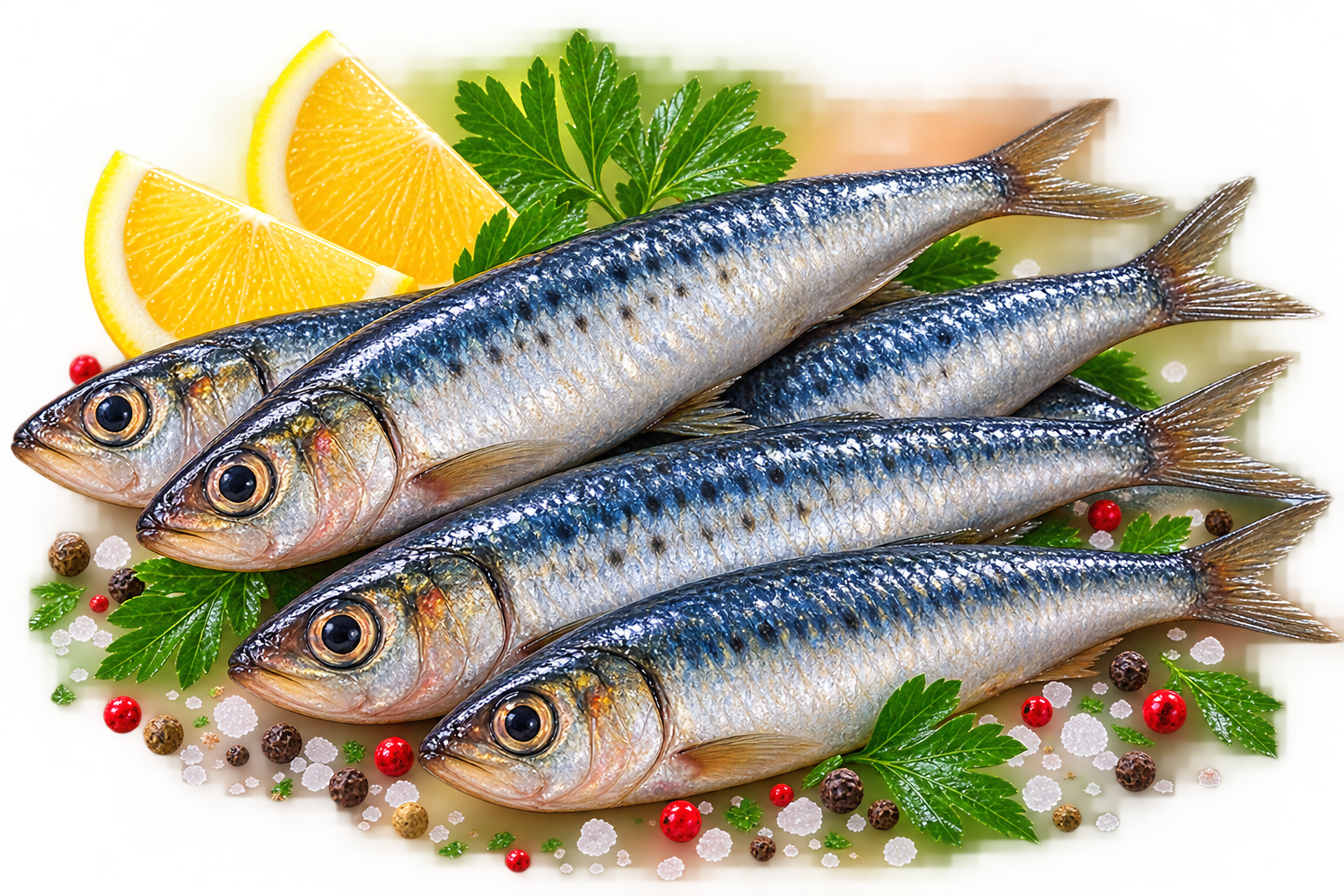
Source: USDA FoodData Central · Canned In Oil, Drained · Data verified by CaloriesCalc
208
kcal
per 100g, canned in oil, drained
24.6
g
Protein
11.5
g
Fat
0.0
g
Carbs
0
g
Fiber
191
kcal per can (92g)
208
kcal per 100g
58
kcal per oz (28g)
🐟
🐟Rich omega-3 — 1.48g EPA+DHA/100g
🦴Calcium — 38% DV from edible bones
💊Vitamin B12 — 150% Daily Value
☀️Vitamin D — 75% Daily Value
🔬Selenium — 75% Daily Value
💰Most affordable omega-3 fish
🐟 Calculate Calories for Any Sardines Weight
Weight100g
Nutrition Facts
Per 100g (cooked sardines)
* % Daily Value based on a 2,000 kcal diet.
Quick summary: Sardines contain 208 calories per 100g with 24.6g protein and 11.5g fat. They are one of the richest omega-3 sources (1.48g EPA+DHA per 100g) and uniquely contain 382mg of calcium per 100g (38% DV) from edible bones — making them the best non-dairy calcium source. Also provides 150% of daily B12 and 75% of vitamin D.
Canned sardines in oil: ~208 kcal/100g. In water/brine: ~185 kcal/100g. Eaten whole with bones — the bones are soft, edible, and provide exceptional calcium. Very low mercury due to short lifespan and small size.
Micronutrient Highlights
💊
Vitamin B12
3.61µg
150% DV
1.5× daily requirement per 100g
🦴
Calcium
382mg
38% DV
From edible bones — best non-dairy source
☀️
Vitamin D
4.8µg
48% DV
Rare food source of vitamin D
🔬
Selenium
52.7µg
96% DV
Antioxidant and thyroid
🐟
Omega-3 (EPA+DHA)
1.48g
—
Rich source — second only to salmon
⚡
Potassium
397mg
8% DV
Blood pressure and heart function
Sardines Health Benefits
Omega-3 — Second Only to Salmon
Sardines provide 1.48g of EPA and DHA per 100g — making them one of the richest and most affordable omega-3 sources available. A single can covers the entire weekly omega-3 recommendation from most health authorities. Unlike supplements, sardine omega-3 comes packaged with protein, vitamin D, and minerals in a complete food matrix that may enhance bioavailability.
Calcium from Edible Bones — Best Non-Dairy Source
Sardines eaten whole with their soft edible bones provide 382mg of calcium per 100g — 38% of the daily value. This is comparable to dairy (whole milk: 113mg/100g, yogurt: 110mg/100g) but significantly more concentrated. The calcium bioavailability from fish bones is excellent — similar to dairy. For people who avoid dairy, sardines are the most effective dietary calcium source.
Vitamin B12 — 150% of Daily Value
A 100g serving of sardines provides 3.61µg of B12 — 150% of the daily requirement. A single can covers more than the entire daily B12 need. B12 deficiency affects an estimated 6% of adults under 60 and 20% of those over 60, with consequences including irreversible neurological damage. Sardines represent one of the most reliable and concentrated B12 sources available.
Low Mercury — Eat Freely
Because sardines are small, short-lived, and feed at the bottom of the food chain (plankton, small crustaceans), they accumulate virtually no mercury. FDA/EPA classify sardines as 'best choice' for maximum consumption frequency. This makes sardines one of the few omega-3-rich foods that can be eaten without restriction, unlike large predatory fish (tuna, swordfish) which accumulate significant mercury.
Sardines have 208 calories per 100g. A can (92g): 191 kcal and 22g protein.
Are sardines high in omega-3?
Yes — sardines provide 1.48g of EPA+DHA per 100g — second only to salmon among common fish. A can covers the entire weekly omega-3 recommendation.
Do sardines have a lot of calcium?
Yes — sardines eaten with bones provide 382mg of calcium per 100g (38% DV). The bones are soft and fully edible, making sardines the richest non-dairy calcium source available.
Are canned sardines healthy?
Very — one of the most nutrient-dense foods available. Rich in omega-3, B12 (150% DV), vitamin D (48% DV), calcium (38% DV), and selenium. The main consideration is sodium (~505mg/100g in brine).
Is sardine good for weight loss?
Yes — 208 kcal with 24.6g protein and high omega-3. Omega-3s improve satiety and support fat metabolism. Despite moderate calories, sardines are very filling.
Why are sardines so healthy?
Sardines' small size means they eat plankton directly, accumulating almost no mercury, while being rich in the omega-3s they synthesise from plankton. They are whole-food eaten with organs and bones — maximising nutrient density. Cheap, sustainable, and extraordinarily nutritious.