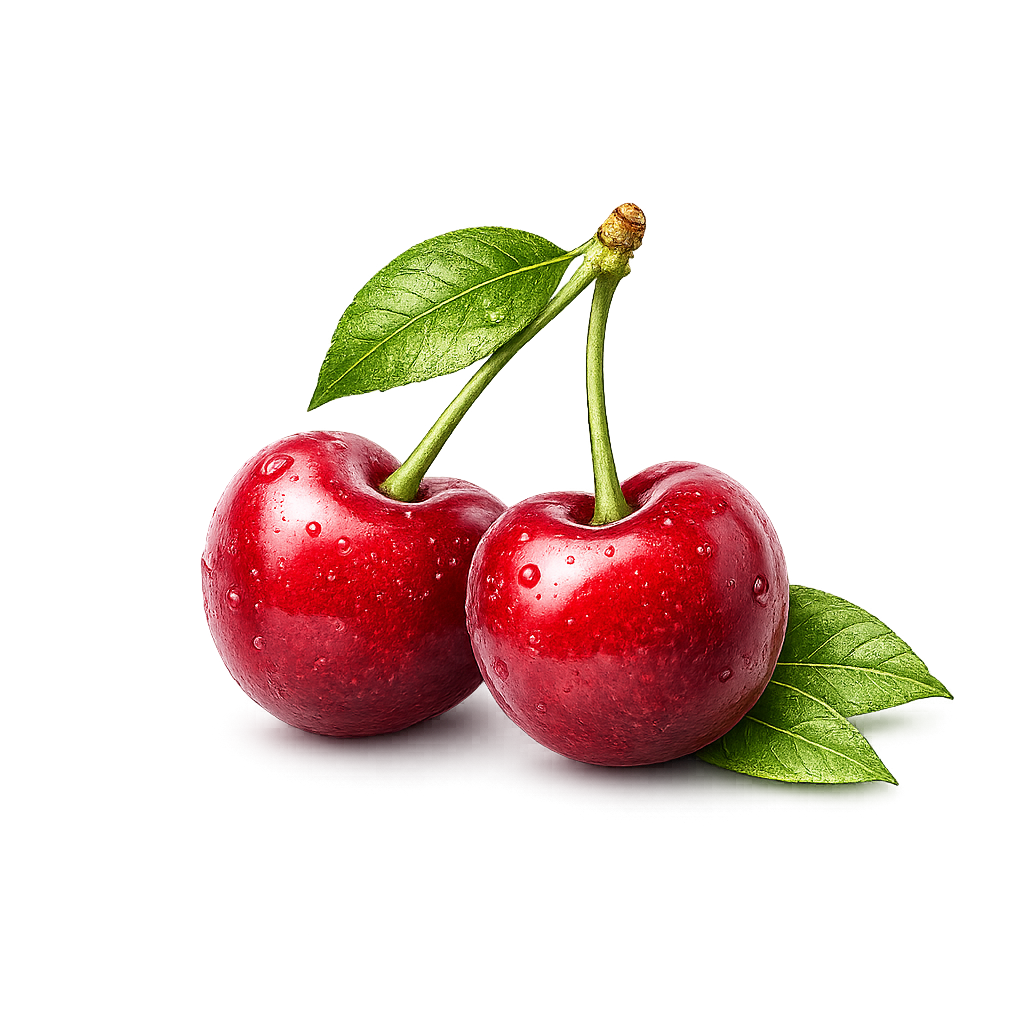
Source: USDA FoodData Central · Raw · Data verified by CaloriesCalc
50
kcal
per 100g, raw
12.82
g
Carbs
1.06
g
Protein
0.2
g
Fat
1.6
g
Fiber
5
kcal per cherry (8g)
97
kcal per cup (154g)
14
kcal per oz (28g)
✔ Natural source of melatonin✔ Rich in anthocyanins✔ Reduces muscle soreness✔ Fat free✔ Gluten free✔ Vegan
🍒
😴Natural melatonin — improves sleep quality
🍒Rich in anthocyanins — anti-inflammatory
💪Reduces post-exercise muscle soreness 20-25%
❤️Lowers uric acid — helps gout
🛡Antioxidant protection
⚡Good source of potassium — 222mg
🍒 Calculate Calories for Any Cherries Weight
Weight100g
Nutrition Facts
Per 100g (raw cherries)
* % Daily Value based on a 2,000 kcal diet.
Quick summary: Cherries contain 50 calories per 100g and 97 calories per cup. They are one of the few significant food sources of melatonin — clinical trials show tart cherry consumption improves sleep duration by 34–84 minutes. Cherries also reduce post-exercise muscle soreness by 20–25% and lower gout attack risk by 35%, driven by anthocyanins (82mg/100g) that inhibit inflammatory enzymes similarly to ibuprofen.
Vitamins & Minerals — per 100g
Nutrient
Amount
% Daily Value
Bar
Potassium
222 mg
5%
Vitamin C
7.0 mg
8%
Copper
0.06 mg
7%
Manganese
0.07 mg
3%
Magnesium
11 mg
3%
Vitamin B6
0.05 mg
3%
Vitamin A (RAE)
3 µg
0%
Folate (B9)
4 µg
1%
Calcium
13 mg
1%
Phosphorus
21 mg
2%
Calories in Cherries by Weight
Weight
Calories
Carbs
Protein
Fat
Calories in Different Cherries Servings
Serving
Weight
Calories
Carbs
Net Carbs
Fat
1 cherry (pitted)
8g
4 kcal
1.0g
0.9g
0.0g
10 cherries
80g
40 kcal
10.3g
9.0g
0.2g
½ cup
78g
39 kcal
10.0g
8.7g
0.2g
⭐ 1 cup
154g
97 kcal
24.7g
22.2g
0.3g
1 oz
28g
14 kcal
3.6g
3.1g
0.1g
How does cherries fit your daily calorie goal?
Calculate your TDEE to see exactly how it fits your daily budget
Cherries are 82% water. Their carbs come primarily from natural sugars (glucose, fructose, sucrose) with 1.6g of fiber per 100g. Net carbs are 11.2g per 100g. Tart cherries (Montmorency) have slightly more anthocyanins and less sugar than sweet cherries (Bing).
Micronutrient Highlights
😴
Melatonin
~0.013 mg
Hormone precursor
Natural sleep hormone — rare in food sources
🍒
Anthocyanins
~82 mg
Antioxidant
Anti-inflammatory, pain reduction, antioxidant
⚡
Potassium
222 mg
5% Daily Value
Blood pressure and heart function
🛡
Vitamin C
7.0 mg
8% Daily Value
Immune support and collagen
🌿
Fiber
1.6 g
6% Daily Value
Digestive health
🔬
Quercetin
~2.5 mg
Flavonoid
Anti-inflammatory, cardiovascular protective
Cherry Health Benefits & Nutrition
Natural Melatonin — the Sleep Hormone
Cherries are one of the few significant dietary sources of melatonin — the hormone that regulates the sleep-wake cycle. Tart cherries (Montmorency variety) contain approximately 0.013mg of melatonin per 100g. Multiple randomised trials show that tart cherry juice consumption increases urine melatonin levels significantly and improves sleep duration by 34–84 minutes and sleep efficiency by 5–6%. This makes cherries unique among fruits in having direct, mechanistic evidence for improving sleep quality.
Post-Exercise Recovery and Muscle Soreness
Cherry juice is one of the most studied natural sports recovery aids. A landmark trial with marathon runners found that those who drank tart cherry juice for 5 days before and 2 days after a marathon had significantly less muscle soreness and strength loss. Multiple subsequent studies confirmed 20–25% reductions in exercise-induced muscle damage markers. The mechanism involves anthocyanins and quercetin inhibiting COX enzymes — essentially a natural anti-inflammatory effect similar to ibuprofen.
Gout and Uric Acid Reduction
Cherries have strong evidence for reducing gout attacks. A 2012 Boston University case-crossover study of 633 gout patients found that cherry consumption over 2 days reduced gout attack risk by 35%. Eating cherries in combination with allopurinol (gout medication) reduced risk by 75%. The mechanism involves anthocyanins inhibiting uric acid production by reducing xanthine oxidase activity.
Cardiovascular Benefits
Cherries are one of the better fruit sources of potassium (222mg/100g), which supports blood pressure regulation. Their anthocyanins reduce LDL oxidation and improve endothelial function. A 2019 study found that daily cherry consumption for 12 weeks reduced systolic blood pressure by 3 mmHg and triglycerides by 11% in older adults.
Cherries contain 50 calories per 100g. A cup of cherries (154g) has 97 calories. A single cherry (8g, pitted) has about 4 calories. Use the slider above to calculate for any weight.
Do cherries help with sleep?
Yes — clinical evidence supports this. Cherries are one of the few foods that naturally contain melatonin. Multiple randomised trials found that tart cherry juice consumption increased sleep duration by 34–84 minutes and sleep efficiency by 5–6%.
Are cherries good for gout?
Yes — cherries have strong evidence for reducing gout attacks. Evidence suggests cherry consumption reduces gout risk by 35%, and eating cherries with gout medication reduces risk by up to 75%. Anthocyanins inhibit uric acid production.
Are cherries keto?
Generally no. Sweet cherries have 11.2g of net carbs per 100g, making them unsuitable for strict keto. A small serving (10 cherries, ~80g) provides 9g of net carbs.
What is the difference between sweet and tart cherries?
Sweet cherries (Bing, Rainier) are larger, darker, sweeter (~12g sugar/100g). Tart cherries (Montmorency, Morello) are smaller, more acidic, with less sugar (~10g/100g) and 2–4× more anthocyanins and significantly more melatonin. Tart cherries are superior for the anti-inflammatory and sleep benefits studied in research.
Can cherry juice replace whole cherries?
For sleep and recovery benefits, tart cherry juice has been the most studied form. However, juice removes fiber and concentrates sugars. For general nutrition, whole cherries are superior. If using juice, choose 100% tart cherry with no added sugar.