Contents
Calories in Shrimp
Source: USDA FoodData Central · Raw · Data verified by CaloriesCalc
99
kcal
per 100g, raw
24.0
g
Protein
0.28
g
Fat
0.24
g
Carbs
0
g
Fiber
83
kcal per 6 large shrimp (84g)
99
kcal per 100g
28
kcal per oz (28g)
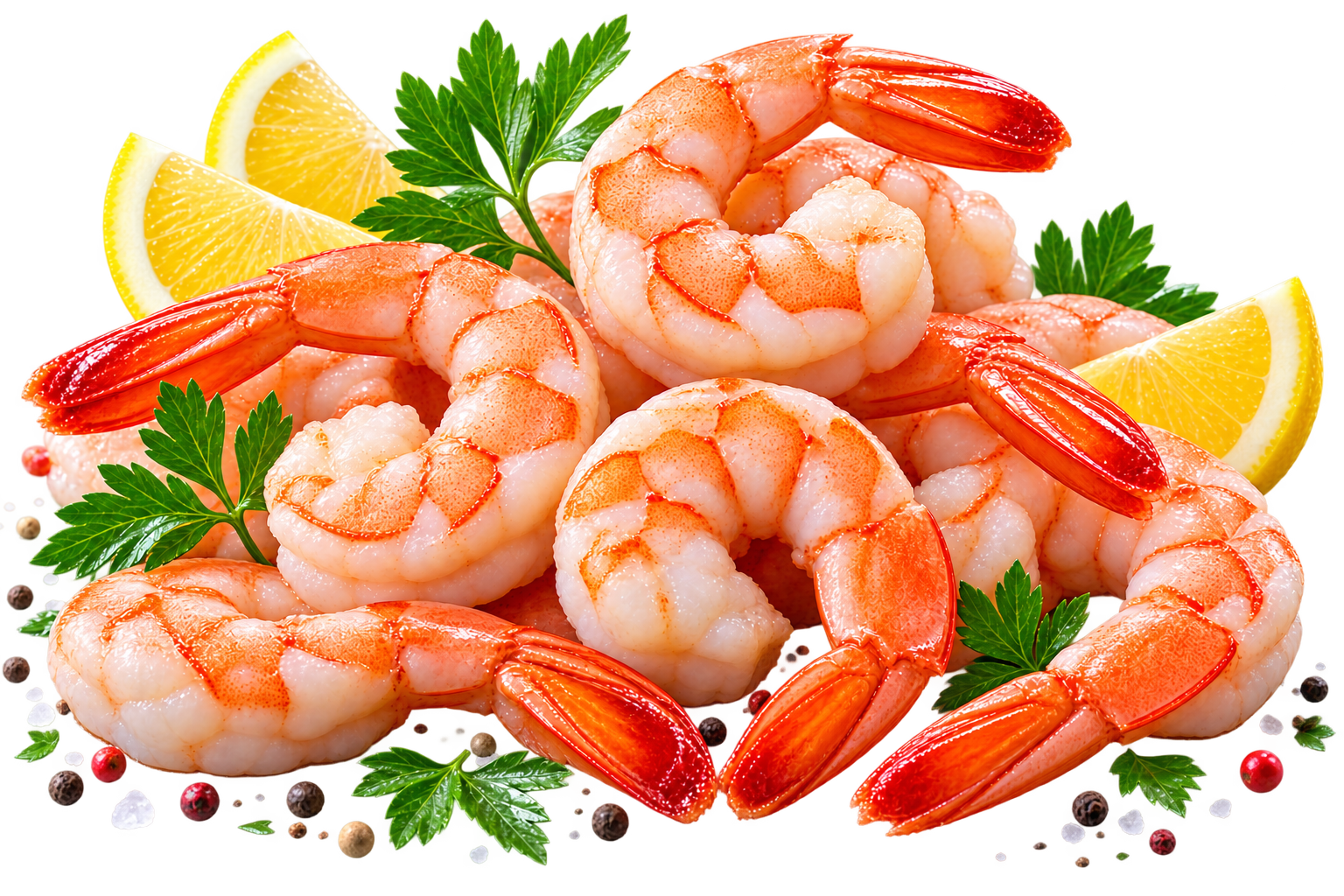
Source: USDA FoodData Central · Raw · Data verified by CaloriesCalc
* % Daily Value based on a 2,000 kcal diet.
| Nutrient | Amount | % Daily Value | Bar |
|---|---|---|---|
| Selenium | 38.0µg | 69% | |
| Vitamin B12 | 1.59µg | 66% | |
| Phosphorus | 205mg | 16% | |
| Zinc | 1.34mg | 12% | |
| Magnesium | 35mg | 8% | |
| Potassium | 185mg | 4% | |
| Vitamin B6 | 0.20mg | 12% | |
| Niacin (B3) | 2.6mg | 16% | |
| Iron | 2.41mg | 13% | |
| Copper | 0.26mg | 29% |
| Weight | Calories | Protein | Fat | Carbs |
|---|
Cooked shrimp is nearly fat-free (0.28g/100g) — virtually all calories from protein. High in dietary cholesterol (189mg/100g) but Research suggests dietary cholesterol minimally impacts blood cholesterol in most people. Very low in mercury.
Shrimp provides 24g of protein at only 99 kcal per 100g — with a protein-to-calorie ratio of 0.97, only turkey breast and egg whites achieve comparable efficiency. The nearly zero fat content (0.28g/100g) means virtually all calories come from protein. Six large shrimp provide 20g of complete protein at only 83 calories.
Shrimp is high in dietary cholesterol (189mg/100g) but research consistently shows this does not raise blood cholesterol for most people. The landmark Framingham Heart Study and subsequent meta-analyses found no association between egg and shellfish consumption and cardiovascular disease. Shrimp is low in saturated fat — the actual driver of LDL cholesterol elevation.
Shrimp contains astaxanthin — the same carotenoid that gives salmon its pink colour. Astaxanthin is 6,000× more potent as an antioxidant than vitamin C and uniquely accumulates in mitochondria. It reduces exercise-induced muscle damage, protects skin from UV damage, reduces markers of cardiovascular risk, and crosses the blood-brain barrier to provide neuroprotective effects.
Shrimp is one of the best dietary sources of iodine — a mineral essential for thyroid hormone synthesis that is often deficient in inland populations. Iodine deficiency is the leading cause of preventable intellectual disability worldwide. Regular shrimp consumption reliably maintains iodine status, particularly important for pregnant women whose iodine requirements increase by 50%.
Nutrition values from USDA FoodData Central. Not medical advice.